

Mass Destruction in Gaza
Mass destruction in Gaza refers to the widespread destruction of civilian infrastructure, including residential buildings, essential services, and public facilities during armed conflict. Under international humanitarian law, attacks must distinguish between civilian and military objectives and must not be disproportionate. Verified Open-Source Intelligence (OSINT) indicates patterns of destruction that may constitute violations of these legal principles.
The widespread destruction of Gaza following the conflict escalation on October 7th, 2023, has led to catastrophic humanitarian consequences. Reports estimate that
Approximately 227,000 housing units have been entirely destroyed, displacing hundreds of thousands of families.
Between 144,000 and 175,000 buildings across the whole Gaza Strip have been damaged or destroyed. That's between 50% and 61% of Gaza's buildings.
85 percent of school buildings in Gaza have been hit or damaged, affecting the education of nearly 400,000 children.
The healthcare system has been crippled, 17 out of 36 hospitals remain functional – all partially – and just 57 out of 132 primary health-care facilities are functional.
International law, particularly through the Geneva Conventions and the Rome Statute, provides a clear framework that prohibits mass bombings, indiscriminate bombings, and the targeting of civilian homes in armed conflict.

Video by Mohammed Saber Arab

Video by Sami F Barhoom

Video by Mohmed Hamss

Photo by Omar el Qattaa

Photo by Omar el Qattaa

Photo by Omar el Qattaa

Photo by Omar el Qattaa
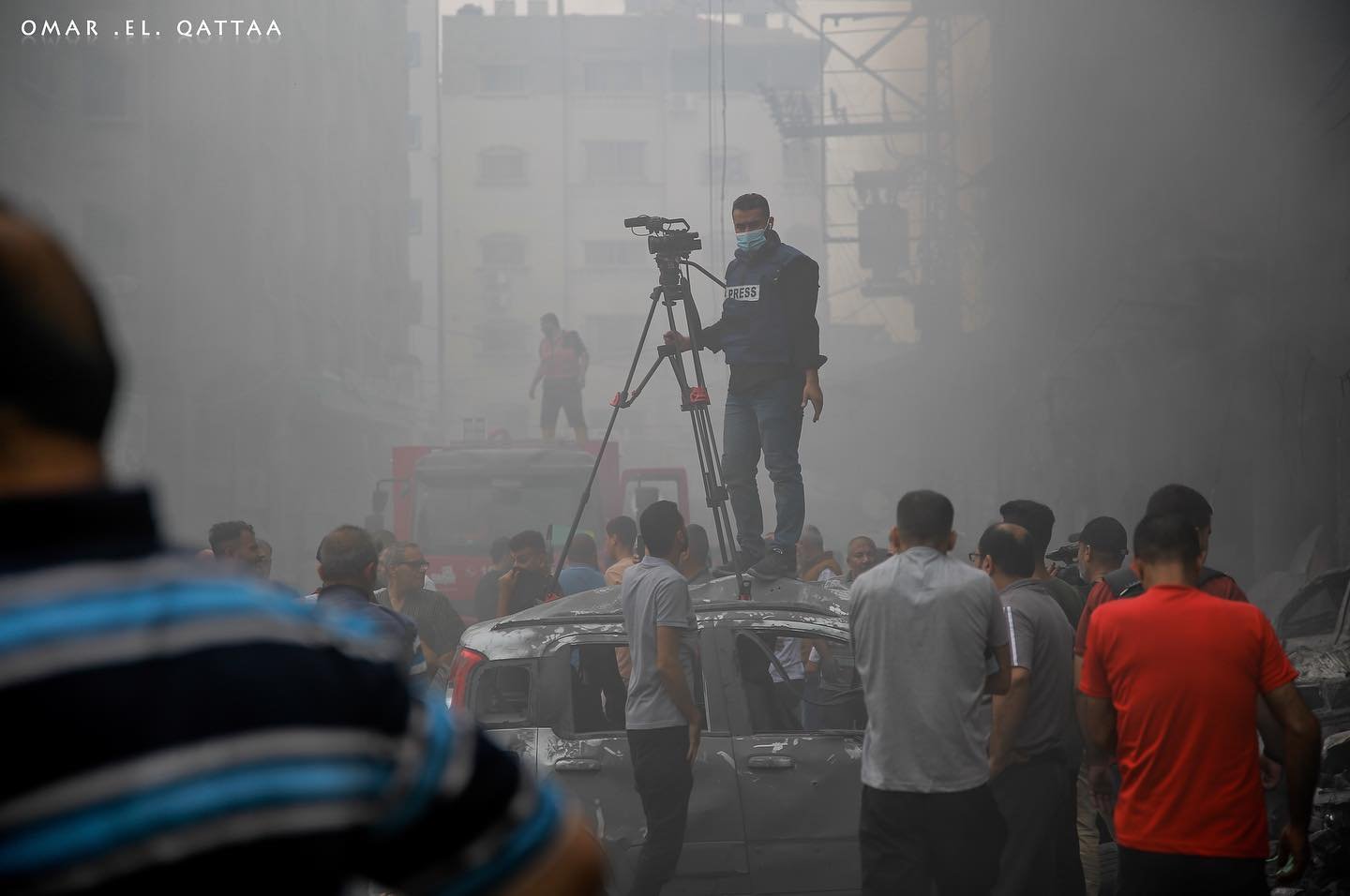
Photo by Omar el Qattaa

Photo by Omar el Qattaa

Photo by Omar el Qattaa

Photo by Yousef Mema

Aerial view of destroyed buildings and rubble in a city, showing extensive damage and debris.
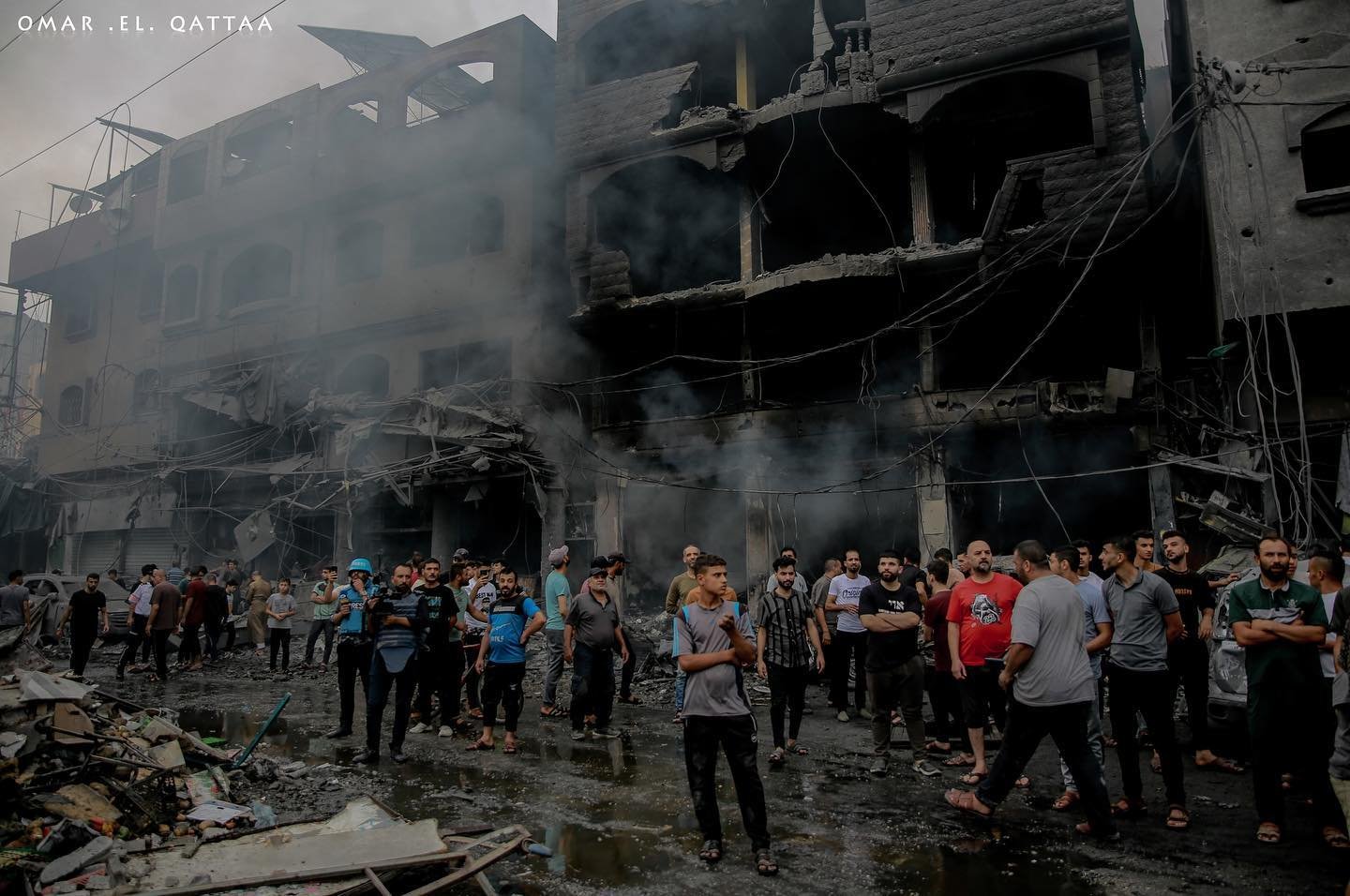
Photo by Omar el Qattaa

Photo by Omar el Qattaa

Photo by Omar el Qattaa

Photo by Mahmoud Bassam

Photo by Mahmoud Bassam

Photo by Omar el Qattaa

Photo by Mahmoud Bassam

Video by Hussein Karsoua

Video by Shadi Al Tabatiby

Video by Omar el Qattaa
What is mass destruction under international law?
Mass destruction refers to large-scale damage to civilian areas and infrastructure that may violate the principles of distinction, proportionality, and necessity under international humanitarian law.
The Geneva Conventions, specifically the Fourth Geneva Convention (1949), focuses on the protection of civilian persons in times of war. Article 27 emphasizes the obligation of parties to a conflict to take all necessary precautions to ensure the protection of civilians and civilian objects. Furthermore, Article 49 prohibits collective penalties and acts of retaliation against the civilian population, underscoring the principle that civilians must not be attacked or subjected to acts of violence.
Additionally, Additional Protocol I to the Geneva Conventions clarifies the distinction between combatants and civilians. Article 48 mandates respect for civilian populations, prohibiting attacks on civilian objects unless they are being used for military purposes. Article 51 further reinforces the principle of distinction by declaring that indiscriminate attacks are prohibited; such attacks are those which are not directed at a specific military objective or which may cause excessive civilian damage compared to the anticipated military advantage.
The Rome Statute of the International Criminal Court (1998) also plays a critical role in defining and prosecuting war crimes. Article 8 outlines a range of serious violations of international humanitarian law, including intentionally directing attacks against the civilian population as such, or against individual civilians not taking a direct part in hostilities. These acts constitute war crimes and are subject to prosecution.
In summary, both the Geneva Conventions and the Rome Statute clearly establish legal prohibitions against mass bombings, indiscriminate bombings, and the targeting of civilian homes. Violations of these norms are seen as serious breaches of international law, aimed at ensuring the protection of civilians and upholding the fundamental principles of humanity in armed conflicts.
The destruction of Gaza stands as a stark testament to the genocidal war, characterized by widespread destruction of infrastructure, homes, and essential services. Israel’s relentless bombardments has reduced neighborhoods to rubble, leaving hundreds of thousands of Palestinian families displaced and in desperate need of aid and an immediate intervention. Schools and hospitals have been severely damaged or destroyed, further exacerbating the suffering of an already vulnerable population. The lack of access to clean water, electricity, and medical supplies highlights the dire conditions faced by civilians, underscoring the urgent need for international attention and accountability for the violations of human rights that have unfolded in this besieged territory. The toll on human life and dignity is immeasurable, calling for a concerted effort to address the immediate needs of those affected while pursuing justice for the atrocities committed.
Indiscriminate bombing and the destruction of critical infrastructure during armed conflict constitute serious violations of international law, particularly as outlined in the Geneva Conventions and the Rome Statute. According to Article 54 of Protocol I of the Geneva Conventions, it is prohibited to attack, destroy, remove, or render useless objects indispensable to the survival of the civilian population, such as water supply systems and food stocks. Furthermore, the Rome Statute of the International Criminal Court identifies such acts as war crimes, specifically under Article 8, which outlines the protection of civilian objects and prohibits unnecessary destruction. These legal frameworks underscore the obligation of all parties in a conflict to distinguish between military targets and civilian infrastructure, thus affirming the need for accountability in the wake of violations.
Sarkha Project is currently engaged in the meticulous processing of evidence pertaining to documented incidents of indiscriminate bombings in Gaza ; however, we recognize the urgency of your request. Accordingly, we invite you to submit an evidence request in advance. While we are unable to provide immediate access to the processed materials, we assure you that once the analysis is complete and the evidence is validated, we will promptly fulfill your request. This procedure underscores our commitment to ensuring that all disseminated information adheres to our rigorous standards of accuracy and integrity.
Findings are based on verified Open-Source Intelligence (OSINT) and assessed against established international legal standards, including the Geneva Conventions and the Rome Statute of the International Criminal Court.
FAQs
What is mass destruction in war?
1
Mass destruction refers to large-scale damage to civilian infrastructure and residential areas, which may violate international humanitarian law if not justified by military necessity.
Is mass destruction a war crime?
2
Mass destruction can be considered a war crime when it involves disproportionate attacks or targets civilian populations in violation of international humanitarian law.
What evidence is used to document mass destruction?
3
Open-source evidence such as satellite imagery, videos, photographs, and verified reports are used to document patterns of destruction and assess potential legal violations.
How can I contact you?
4
You can reach us anytime via our contact page or email. We aim to respond quickly—usually within one business day.